
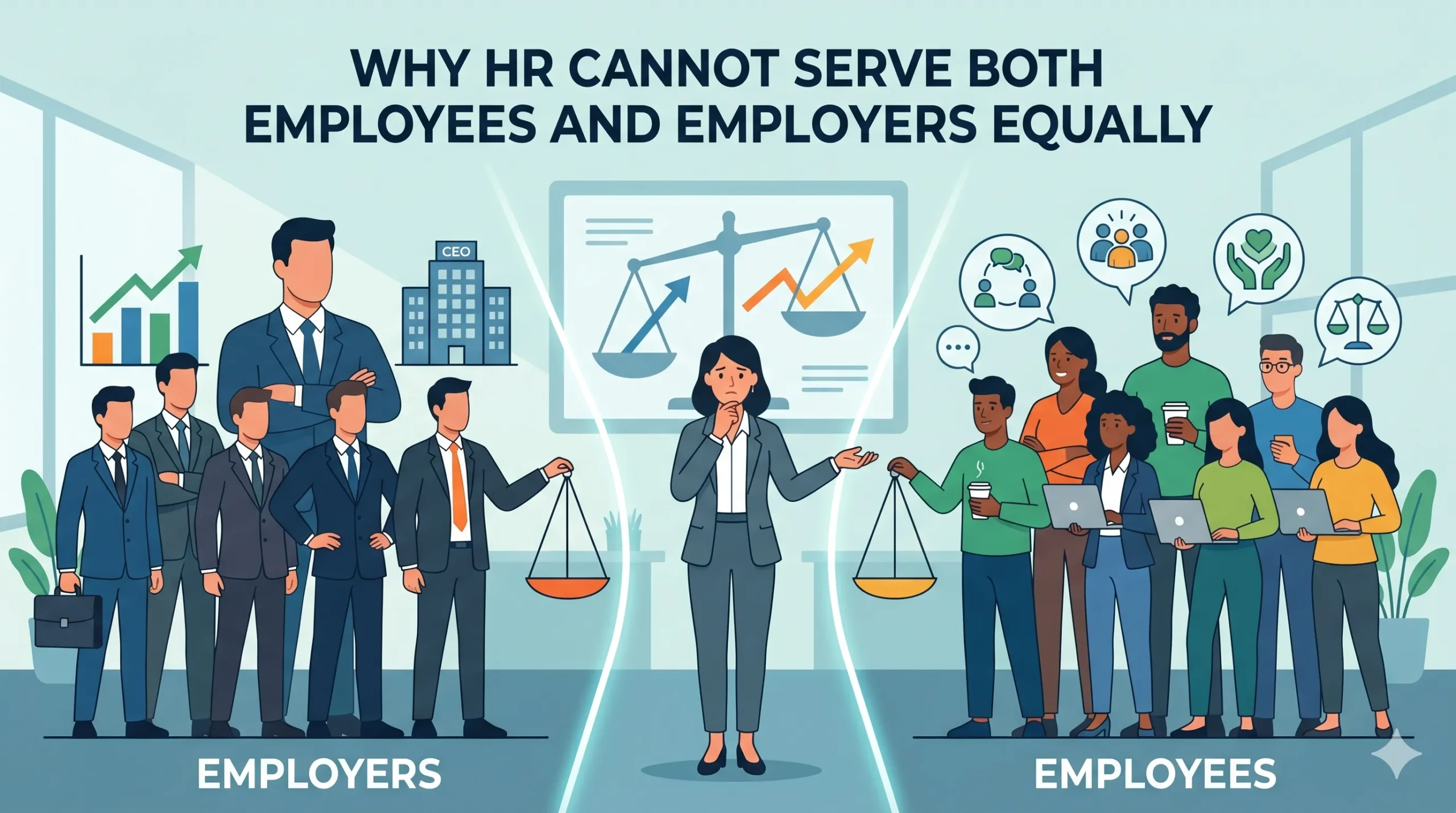
Human resources departments often face a big challenge. They must protect the company while also helping staff. This can lead to significant friction when problems happen in the workplace.
The danger of bias in a workplace investigation is a big worry. HR people work for the company. So, they tend to protect it more than being fair to everyone.
Staff often feel left out when they see HR siding with the company. If you’re dealing with these issues, call our Workplace Investigations Melbourne team for help.
Key Takeaways
- HR departments face a fundamental conflict between corporate goals and staff welfare.
- Neutrality is difficult to maintain when the employer pays the investigator.
- Employees should be aware of possible conflicts during internal grievance processes.
- Seeking external advice can give a clearer view of your rights.
- Our team is available at 0418 101 164 to help with workplace problems.
The structural conflict of interest in modern HR departments
Many workplace disputes stem from a deep issue in HR. Human resources staff are paid by the company. This creates a HR conflict of interest that makes staff feel ignored.
The dual mandate dilemma
HR has a tough job. They must help the company and support staff. This makes it hard for HR to please everyone.
When a problem comes up, HR must choose. They often pick keeping the company happy over listening to staff. This makes it hard for HR to stay neutral.
Financial alignment with the employer
Companies focus on making money first. HR has to watch their budget too. This means they might side with the company over staff.
Keeping the company’s image good is often more important than solving staff problems. Knowing this helps staff deal with HR better. It’s key to solving workplace issues.
The danger of bias in a workplace investigation
When a company looks into its own staff, the danger of bias in a workplace investigation is big. Many try to be fair, but it’s hard. They have to balance the business’s needs with the rights of the person being investigated.
Cognitive bias and the presumption of innocence
People’s decisions are often influenced by shortcuts in their minds. Investigators might look for evidence that backs up what they think. This can harm the presumption of innocence because they might see unclear actions as proof of guilt.
Also, HR investigation ethics are tested when personal ties or past reviews affect the investigation. If an investigator knows the people involved, staying neutral is hard. This can lead to unfair judgments.
The pressure to protect company reputation
Companies face a lot of pressure to avoid risks and keep a good image. This can lead to internal investigation bias that puts the company first. If a finding could harm the company, the investigation might be biased.
Management sees investigations as a way to protect the company, not just find the truth. This makes it tough for HR to stay impartial. The goal to protect the company can overshadow fairness.
How internal investigations often favour the status quo
Internal processes aim to keep things stable, which means they often stick with what’s already there. Findings that challenge leaders or the culture are often downplayed. This makes it hard to hold people accountable.
When internal investigation bias decides the outcome, it protects the current power structure. Employees may feel the system is unfair. This can damage trust in HR investigation ethics. If the goal is to keep peace, not find the truth, the workplace culture suffers.
Legal and ethical implications for Australian employers
Australian employers face big legal challenges when their HR processes are not fair. They often struggle to balance protecting the company with following the law. If HR systems favour the employer too much, the risk of legal trouble grows.
Fair Work Act compliance challenges
Keeping up with Fair Work Act compliance is a big worry for Australian businesses. The law requires employers to be fair and balanced when dealing with employee issues. If they fail, they could face serious legal problems.
It’s hard for companies to follow the law and their own interests at the same time. When HR works too closely with management, they might forget about the employee’s rights. This can lead to a gap between what the company wants and what the law requires.
The risk of unfair dismissal claims
Flawed internal processes can lead to more unfair dismissal claims Australia. If an employee feels they were treated unfairly, they might go to court. This can cost a lot of money and harm the company’s reputation.
- Increased legal costs during tribunal hearings.
- Loss of productivity due to prolonged disputes.
- Negative impact on workplace morale and retention.
Maintaining procedural fairness in a biased environment
Procedural fairness in HR is key for both employers and employees in disputes. But, it’s hard to keep it fair when the workplace leans one way. Employers must make sure their investigations are fair to avoid unfair claims.
| Process Type | Outcome Focus | Legal Risk |
|---|---|---|
| Biased Internal Review | Protecting Management | High |
| Objective Investigation | Fact-Finding | Low |
| Independent Mediation | Resolution | Minimal |
To avoid these risks, businesses should think about making their reporting systems clearer. By focusing on procedural fairness in HR, companies can defend their actions better. Being impartial is the best way to deal with the legal challenges of today’s Australia.
How internal reporting mechanisms fail employees
Employees trying to speak up often find a system that protects the company more than them. Many companies say they have open-door policies. But, the reality of HR policy failure leaves staff feeling scared and alone. These systems usually focus on keeping the company safe, not solving problems.
The fear of retaliation and career stagnation
The biggest reason people don’t report problems is fear. They worry that speaking out will hurt their job or make them isolated. This fear is real because many systems don’t protect whistleblowers well.
Feeling like their job is at risk makes people less likely to report issues. This silence lets bad behaviour keep happening. It hurts the whole work culture. Protecting one’s livelihood often means not speaking up about big problems.
Lack of confidentiality in internal processes
Confidentiality is a big issue in many workplaces. People share secrets with HR, but then those secrets get shared with others. This breaks trust and stops others from reporting problems.
Without a promise of privacy, investigations can’t be trusted. A HR policy failure happens when keeping things in-house is more important than keeping things private. This makes staff doubt HR’s ability to handle sensitive issues with care.
Why employees feel alienated by HR policies
Rules that are too strict and hard to follow make staff feel like they’re just tools, not people. When rules are applied unfairly, it feels like employee rights in Australia are ignored. This makes a gap between workers and the company’s management.
Good grievance handling needs empathy and fairness. But, many systems are just about getting things done, not caring about people. When concerns are ignored, workers feel like they don’t belong. It’s key to respect employee rights in Australia to keep a good work place where everyone feels valued.
The role of external investigators in maintaining neutrality
Using internal staff to investigate their colleagues can lead to a big HR conflict of interest. When HR looks into senior staff or long-time employees, they face a tough challenge. It’s hard for them to stay impartial because of their loyalty to the team.
Removing the internal conflict of interest
External investigators start fresh, without the office politics that internal reviews often face. By bringing in outside experts, companies keep their HR team neutral. This way, the investigator doesn’t have a personal interest in the company’s success.
Ensuring objective evidence gathering
An impartial workplace investigation needs facts gathered without company pressure. External experts are trained to spot biases that might affect internal staff. They stick to the evidence, checking every statement and policy carefully.
Benefits of third-party oversight
The main plus of using outside experts is the increased credibility of the report. When employees know an independent party looked into their concerns, they trust the outcome more. This approach helps protect the company from legal issues and builds a culture of openness and responsibility.
Recent trends in Australian workplace dispute resolution
The way we handle disputes in the workplace is changing. Companies are moving from old, closed methods to new, open ones. This change comes from a need for fairness and honesty at work.
Shift towards independent mediation
More businesses are seeing that HR teams can’t always be impartial. So, they’re turning to independent workplace mediation to solve problems. This way, everyone gets a fair say without bias.
This method helps to calm down conflicts before they turn into big legal fights. It creates a safe space for talking things out. People are more likely to take part when they know the mediator is fair.
Increased scrutiny from regulatory bodies
Regulatory bodies in Australia are watching more closely than ever. They want to see clear, fair evidence and strict procedures. They check how companies handle complaints to make sure they follow the law.
This means companies must show they’re fair and unbiased very carefully. Not doing so can lead to big fines. Being proactive about following the rules is now key for any business.
The impact of high-profile workplace culture cases
Recent workplace culture cases have made companies wake up. Big investigations into bullying and harassment have shown the flaws of just using HR. These failures have hurt reputations and cost a lot of money.
So, boards and leaders are thinking differently about solving problems. They know reputation is delicate and needs to be protected. This change is here to stay for Australian businesses.
Protecting the organisation versus protecting the individual
The struggle between keeping a business stable and respecting individual rights is big. HR people often face a tough choice. They must balance what’s best for the company with what’s right for employees.
The primary duty of care to the business entity
The corporate duty of care mainly looks after the company. Directors and managers aim to keep the business strong and profitable. HR teams act as a barrier to protect the company from risks.
This focus leads to processes that reduce risks but might not support employees. It can make a big gap between what a company says it values and how it really acts.
When individual rights are sacrificed for corporate stability
At times, employee rights in Australia are ignored to keep the company safe. When big problems happen, the company’s image is more important. This can make employees feel ignored and unsafe.
Choosing to protect the company over an employee can be very hard. Many workers face this when dealing with company complaints.
The ethical boundary of human resources management
It’s key for HR to know where to draw the line. They must be both strategic and fair. If they focus too much on the company, trust can break down.
Companies need to see that employee rights in Australia are important. A true corporate duty of care means being open and fair. It’s not just about keeping things the same.
Professional guidance for navigating complex workplace grievances
Dealing with a tough grievance is more than just complaining at work. It needs careful planning and outside help. If usual workplace grievance procedures don’t work, you need a fresh view. A smart plan keeps your rights safe all the way.
Seeking independent legal advice
Talking to a good lawyer can clear up your rights under Australian law. Independent counsel checks if your boss has broken the rules. Getting legal support for employees is key against big companies.
Documenting incidents for external review
Keeping a detailed log of events is key for any review. Write down dates, times, places, and witness names. This meticulous documentation proves your case with solid evidence, not just stories.
| Support Type | Primary Focus | Independence Level |
|---|---|---|
| Internal HR | Company Protection | Low |
| Legal Counsel | Employee Rights | High |
| External Mediator | Conflict Resolution | High |
Contacting experts for impartial support at Workplace Investigations Melbourne
Choosing the right step in a dispute can be hard. For professional HR advice that looks out for you, our team is here. Call our experts for unbiased help at 0418 101 164 to talk about your case.
Conclusion
Modern Australian workplaces face a big challenge. They struggle to balance business needs with employee rights. This creates a problem that often leaves staff feeling left out.
Recognising this issue is the first step to a better work environment. True fairness needs outside help and mediation. Using experts ensures fair attention to complaints.
This method keeps the process fair and protects workers from bias. Employees should keep records of their experiences. They should also seek outside help when needed.
This way, workers can stand up for their rights. By focusing on fairness and respect, workplaces can improve. This leads to a better work culture for everyone.